Mango Dream: The Modern Sans Serif for a Global Brand
Understanding the Appeal of This Modern Typeface
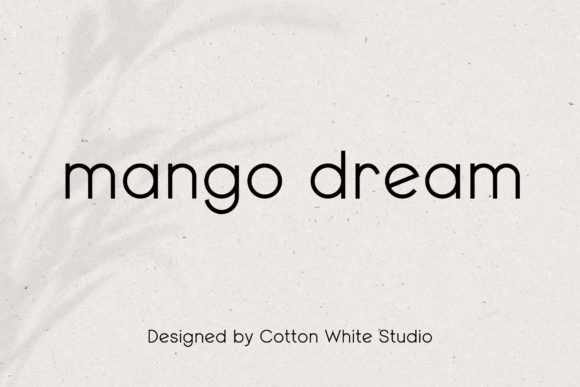
In the crowded landscape of digital typography, finding a premium font that balances professionalism with approachability is a rare find. Mango Dream enters the scene as a modern sans-serif font characterized by its distinct round and minimalistic shape. It does not scream for attention with sharp angles or aggressive strokes. Instead, it invites the viewer in with soft curves and a clean, contemporary aesthetic. This is the kind of typeface that feels instantly familiar yet distinctly fresh, making it a powerful tool for creators who want their message to land without visual friction.
The visual personality of Mango Dream is defined by its geometry. The letterforms are constructed with uniform stroke widths and rounded terminals, which creates a friendly and open atmosphere. This minimalistic approach ensures that the font remains highly legible across various sizes, from massive headlines to fine print. Unlike many decorative fonts that sacrifice function for style, this sans serif font maintains structural integrity while exuding a subtle warmth. It bridges the gap between cold, industrial modernism and playful, organic design, offering a middle ground that is difficult to achieve with standard system fonts.
Where Mango Dream Shines: From Branding to Web Design
The versatility of Mango Dream makes it an invaluable asset in a designer's toolkit. Its clean lines make it an exceptional choice for logo design, particularly for brands aiming for a youthful, innovative, or health-conscious identity. Think of a boutique skincare line, a modern tech startup, or a creative agency. In these contexts, the font communicates clarity and forward-thinking values. When used in packaging design, the rounded shapes of the letters can soften the visual impact of the product, making it appear more accessible and consumer-friendly on crowded shelves.
For those working in web design, the utility of Mango Dream extends to user interface elements and body copy. Its high x-height and open apertures ensure that text remains readable on backlit screens, reducing eye strain for the user. This is crucial for editorial design and blogging, where long-form content needs a font that guides the reader effortlessly from one sentence to the next. Furthermore, because Mango Dream comes with multilingual support, it is a robust solution for global campaigns. Whether you are publishing content in English, Spanish, French, or German, you can maintain brand identity consistency without worrying about missing glyphs or awkward substitutions.
Social media managers and content creators will also find Mango Dream to be a reliable workhorse for social media graphics. In the fast-scrolling environment of Instagram or LinkedIn, a display font needs to be legible at a glance. The distinct silhouette of this typeface allows for quick comprehension, making it ideal for quote cards, infographics, and promotional banners. It pairs exceptionally well with photography, providing text overlays that complement the image rather than competing with it.
Strategic Typography: Readability, Hierarchy, and Pairing
Choosing a font is rarely just about aesthetics; it is about strategy. The round, minimalistic nature of Mango Dream influences how a viewer perceives a brand. Rounded shapes in typography are often psychologically associated with kindness, safety, and community. By integrating this typeface into your brand identity, you are subtly signaling that your business is approachable and customer-centric. This is a powerful psychological lever for entrepreneurs and small business owners looking to build trust with their audience.
When it comes to visual hierarchy, Mango Dream performs admirably, but it requires thoughtful implementation. Because it is a sans serif font, it provides a neutral canvas. To create contrast, consider pairing it with a serif font for long-form body text or a script font for accent headers. A common mistake in design is pairing two similar sans-serifs together. Instead, look for a font pairing that offers structural contrast. For example, using a classic serif like Garamond for body text can give your layout a timeless quality, while Mango Dream handles the modern, punchy headlines.
It is also distinct enough to avoid the "generic" trap associated with standard system fonts like Arial or Helvetica. While those fonts are ubiquitous, Mango Dream offers that slight stylistic deviation that signals a creative font choice without alienating the audience. It proves that you don't need a chaotic or overly complex handwritten font to stand out; sometimes, the best design choice is a refined, modern typography solution.
Practical Guidance for Implementation and Licensing
Before integrating Mango Dream into your next project, a few practical steps will ensure you get the most out of this typeface. First, always review the included styles and weights. A robust commercial font usually includes Regular, Bold, and Italic variations at a minimum. Understanding the weight range allows you to create depth in your layouts without needing to introduce a second typeface. For instance, using the Bold weight for call-to-actions and the Regular weight for descriptions creates a cohesive look.
Next, consider the context of your design assets. If you are working on print materials like brochures or business cards, test the font at the actual print size. What looks good on a 27-inch monitor might look different when printed on textured paper. Mango Dream is generally forgiving due to its clear letterforms, but testing is a non-negotiable step for professional results. Ensure that the spacing (kerning and tracking) is optimized for your specific layout.
Finally, respect the licensing. Since Mango Dream is a premium font, it likely comes with specific usage rights. If you are a freelancer creating a logo for a client, ensure your license covers commercial use or that the client purchases their own license for the final deliverable. This protects both your business and the font foundry that created the asset. Whether you are designing a startup pitch deck, a wedding invitation, or a corporate website, Mango Dream offers the flexibility and polish required to elevate your visual communication. It is a solid investment for anyone serious about quality design.